
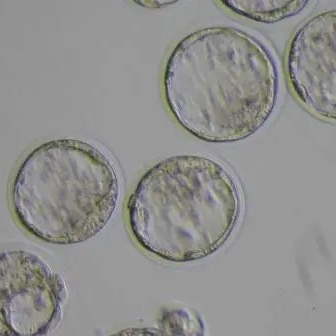

Embryos in the Spotlight: Decoding Societal Imaginaries in the intersection of Sicence, Health and Belief
I delved into individual opinions in my research journey on beliefs and attitudes toward human embryos in Argentina, a country located in South America that has recently legalised abortion in 2023. I explored the complex sociocultural layers surrounding the conception of embryos in our society. The intricate articulation between science, health, and individual beliefs becomes critical to political and public policy outcomes and affects women’s health. The very essence of what constitutes an “unborn” or a “fetal person” is deeply entwined with both scientific discourse and individual perspectives or beliefs. As Lynn Morgan aptly puts it, “People make people,” emphasising the sociocultural construction of the ontological status of the unborn.
Anthropologist Lynn Morgan emphasises the influence of the sociocultural context on the treatment and perception of embryos. According to Morgan, the notion of a “fetal person” is a social construct, an entity whose ontological status is subject to constant negotiations and disputes (Morgan, 2022 in Irrazábal & Martínez, 2022).
Since the 1970s, social sciences have contributed to analysing various dimensions of embryo discussions. Cultural and social history has investigated the construction of the embryo as an icon of life and its connection to the consolidation of embryology as a science (Morgan, 2022 in Irrazábal & Martínez, 2022).
The connection between medicine and reproductive health has also been a focal point in exploring beliefs. Works have analysed the meanings of fetuses and embryos through images, discourses, and technologies, while others have examined the intersection between assisted reproduction technologies and religions (Irrazábal & Johnson, 2019, Johnson, 2022 ; Olmos Álvarez, 2022 in Irrazábal & Martínez, 2022).
The meanings of fetuses and embryos through images, discourses, and technologies have also been a topic of research to examine the intersection between healthcare during pregnancy and religious perspectives, accentuating the dynamic interplay between health practices and cultural or religious values (Irrazábal, 2022 in Irrazábal & Martínez, 2022)
Some authors have explored the processes of socialisation and memory of the “unborn” or dead babies. For instance, Bárbara Martínez has researched the paths of socialisation of deceased neonates and unborn in Andean populations, while María Esther Fernández Mostaza has addressed these processes in their intersection with complementary and alternative medicines (Martínez, 2022; Fernández Mostaza, 2022 in Irrazábal & Martínez, 2022). Authors have also studied the profound realms of death and grieving about the unborn and how communities navigate mourning for neonates and the unborn, particularly in populations with diverse beliefs and practices (Martínez, 2022; Fernández Mostaza, 2022 in Irrazábal & Martínez, 2022).
Utilising the analytical tool of “ethical repertoires,” which encompass socially available resources for perceiving, evaluating, and acting in specific situations, authors unveil dynamic and situated practices interweaving meanings related to life, kinship, market, and science, all contingent upon power relations among the involved actors.(Olmos Álvarez, Johnson & Irrazábal, 2023)
In the context of the public debate on the legalisation of abortion in different contexts, the use of the “unborn” figure as a mobiliser of political action has been analysed (Felitti & Irrazábal, 2018).Authors have focused on legislative debates about the identity and ontological status of the born, highlighting the complexity of discussions in science, medicine, and bioethics (Irrazábal, 2022 in Irrazábal & Martínez, 2022).
The social sciences increasingly focus on embryos, highlighting a burgeoning interest in understanding the multifaceted dynamics surrounding their perception, representation, and societal implications. We developed a collaborative bibliography list with international works on the subject. (Johnson, 2022 in Irrazábal & Martínez, 2022)
These diverse dimensions reveal the interwoven facets of the contemporary discussion about human embryos and their role as social constructs. Beyond individual responses, this holistic approach allows us to appreciate the richness and complexity of beliefs and attitudes on these crucial issues.
This research, which started when I had my first visiting fellowship at ISOR UAB in 2016, continues to unravel the deeper layers of the relationship between science, society, and beliefs, providing a comprehensive perspective that enriches our understanding of these critical topics.
References
Felitti, K., & Irrazábal, G. (2018). The unborn and the women who gestated them: Meanings, political practices and rituals in Buenos Aires. Revista de Estudios Sociales, 64, 125-137. https://doi.org/10.7440/res64.2018.10
Irrazábal, G., & Johnson, M. C. (2019a). Reproducción asistida, gestación por sustitución y creencias. Un análisis desde las usuarias de tecnologías, los expertos religiosos y las regulaciones estatales en Argentina. Política y Sociedad, 56(2), 317-339. https://doi.org/10.5209/poso.59741
Irrazábal, G. & Martínez, B., dir. (2022) Bebés muertos y no nacidos. Imaginarios, prácticas y políticas en torno a las interrupciones y pérdidas gestacionales en Argentina y España, Buenos Aires: CEIL libros. ISBN 978-987-48047-7-8
Irrazabal, M. G., Olmos Alvarez, A. L., & Johnson, M. C. (2023). Creencias y actitudes sobre los embriones: Tercer Informe de la Encuesta Ciencia, Salud, Creencias y Sociedad en contexto de pandemia Covid-19 en Argentina. https://ri.conicet.gov.ar/handle/11336/219816
Irrazabal, M. G., Olmos Alvarez, A. L., & Johnson, M. C. (2023). Creencias y actitudes sobre los embriones: Tercer Informe de la Encuesta Ciencia, Salud, Creencias y Sociedad en contexto de pandemia Covid-19 en Argentina. http://undavdigital.undav.edu.ar/handle/20.500.13069/1325
 Science Religion and Health